USA
Explore Gallup's research.

Americans continue to name football as their favorite sport by a wide margin. Soccer now rivals baseball and basketball as the second most popular sport.

About half of owners are satisfied with their local business climate; higher revenue growth and general dissatisfaction predict departure plans.

Americans' satisfaction with the quality of K-12 education in the U.S. has fallen to 32%, a new low in Gallup's 27-year trend.

Support for labor unions is at its modern-day peak in the U.S., both in approval and in Americans' desire for unions to gain influence.
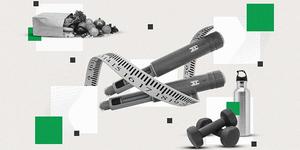
GLP-1 usage may be most effective when paired with certain healthy routines, supportive relationships and a pattern of positive daily behaviors.

Americans are more likely to attribute UFO sightings to human activity or natural phenomena than alien activity; 17% say they have seen a UFO.

Students who feel their teachers recognize their talents and who say their schoolwork is relevant are more likely to feel prepared for the future.
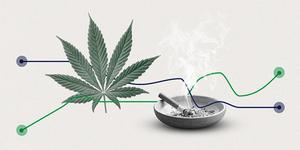
Americans' reported marijuana smoking ties a record high of 17%, while cigarette smoking matches its record low of 11%.

The percentage of Americans who report drinking alcohol is holding at a record-low 54% for a second year in a row.

Nearly four in 10 Americans say extreme weather damaged their community in the past year, and six in 10 of them worry about future impacts.

Forty-five percent of U.S. adults say they have participated in at least one of 13 different forms of gambling in the past year, well below prior measures.

Roughly four in 10 U.S. adults say it is very important for a couple to legally marry if they plan to build a life together or have a child together.

Americans tie capitalism to innovation but also inequality, and socialism to economic security but also government overreach and dependency.

Americans and Canadians most often use their own internet research for financial guidance. Financial advisors and finance professors are the most trusted sources.

Most U.S. youth volunteer or serve their community, and most also see everyday acts of kindness as meaningful forms of community service.
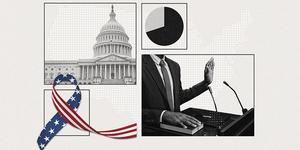
Seven in 10 Americans express strong confidence in military veterans, while 77% trust them to perform well as elected leaders.

The U.S. Supreme Court's 33% job approval rating is the lowest in Gallup's 26-year trend by a significant margin.

Gallup's Economic Confidence Index improved to -31 in July, driven by gains among Republicans and independents.
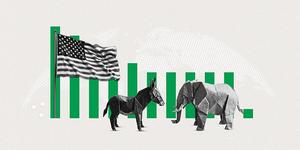
The World Risk Poll finds that one in 10 Americans name politics as the top risk to daily safety, with no other country rating it as a greater risk.
About one in eight U.S. adults say four-year colleges or universities are doing an "excellent" or "good" job providing an affordable education.